- Donate & Help
Keep Us Online - Child abuse &
Family Violence -
What is Child Abuse
Types- Abuse & Neglect - Causes of child abuse
- Abuse Statistics
-
Consequences abuse & neglect
Longitudinal study- LONG SCAN - Health consequences of child abuse & neglect
- Physical consequences
- Psychological Consequences
- Societal Consequences
Where to get Help

Child Abuse a review
Publishing pending report March 2015
Child Maltreatment study
What Is Child Abuse and Neglect?
Author(s): Child Welfare Information Gateway Year Published: Republishing Pending
Each State provides its own definitions of child abuse and neglect based on minimum standards set by Federal law.
How Is Child Abuse and Neglect Defined in Federal Law?
Federal legislation lays the groundwork for States by identifying a minimum set of acts or behaviors that define child abuse and neglect.
The Federal Child Abuse Prevention and Treatment Act (CAPTA), (42 U.S.C.A. 5106g) Federal Child Abuse Prevention and Treatment Act (CAPTA), currently pending Children's Bureau (CB) announces the opportunity for public comment on the policy interpretation of section 106(b)(2)(B)(x) articulated in question 2.1A.4 #8 of the Child Welfare Policy Manual (CWPM), which concerns the public disclosure of findings or information about a case of child abuse or neglect which results in a child fatality or near fatality. Submit written or electronic comments on or before June 29, 2015.
Keeping Children and Families Safe Act of 2003, defines child abuse and neglect as, at minimum:
- Any recent act or failure to act on the part of a parent or caretaker which results in death, serious physical or emotional harm, sexual abuse or exploitation; or
- An act or failure to act which presents an imminent risk of serious harm.
Most Federal and State child protection laws primarily refer to cases of harm to a child caused by parents or other caregivers; they generally do not include harm caused by other people, such as acquaintances or strangers.
What Are the Major Types of Child Abuse and Neglect?
Within the minimum standards set by CAPTA, each State is responsible for providing its own definitions of child abuse and neglect.1 Most States recognize four major types of maltreatment: physical abuse, neglect, sexual abuse, and emotional abuse. Although any of the forms of child maltreatment may be found separately, they often occur in combination. In many States, abandonment and parental substance abuse are also defined as forms of child abuse or neglect.
The examples provided below are for general informational purposes only. Not all States' definitions will include all of the examples listed below, and individual States' definitions may cover additional situations not mentioned here.
Physical abuse
nonaccidental physical injury (ranging from minor bruises to severe fractures or death) as a result of punching, beating, kicking, biting, shaking, throwing, stabbing, choking, hitting (with a hand, stick, strap, or other object), burning, or otherwise harming a child, that is inflicted by a parent, caregiver, or other person who has responsibility for the child.2 Such injury is considered abuse regardless of whether the caregiver intended to hurt the child. Physical discipline, such as spanking or paddling, is not considered abuse as long as it is reasonable and causes no bodily injury to the child.
Neglect
Failure of a parent, guardian, or other caregiver to provide for a child's basic needs. Neglect may be:
- Physical (e.g., failure to provide necessary food or shelter, or lack of appropriate supervision)
- Medical (e.g., failure to provide necessary medical or mental health treatment)
- Educational (e.g., failure to educate a child or attend to special education needs)
- Emotional (e.g., inattention to a child's emotional needs, failure to provide psychological care, or permitting the child to use alcohol or other drugs).
These situations do not always mean a child is neglected. Sometimes cultural values, the standards of care in the community, and poverty may be contributing factors, indicating the family is in need of information or assistance. When a family fails to use information and resources, and the child's health or safety is at risk, then child welfare intervention may be required. In addition, many States provide an exception to the definition of neglect for parents who choose not to seek medical care for their children due to religious beliefs that may prohibit medical intervention.
Sexual Abuse
includes activities by a parent or caregiver such as fondling a child's genitals, penetration, incest, rape, sodomy, indecent exposure, and exploitation through prostitution or the production of pornographic materials. Child marriage may be considered in many modern western cultures as a form of child sex slavery and child trafficking. Review the next two sections for more information on child sex slavery and child marriage.
Child Sex Slavery & Human Trafficking
Sex trafficking is a type of human trafficking involving the recruitment, transportation, transfer, harbour or receipt of people, by coercive or abusive means for the purpose of sexual exploitation. Sex trafficking is not the only form of human trafficking and estimates vary as to the percentage of human trafficking which is for the purpose of transporting someone into sexual slavery.
The BBC News cited a report by UNODC as listing the most common destinations for victims of human trafficking in 2007 as Thailand and Japan. The report lists Thailand, China, Nigeria, Albania, Bulgaria, Belarus, Moldova and Ukraine as major sources of trafficked persons.
Human trafficking is the trade in humans, most commonly for the purpose of sexual slavery, forced labor or commercial sexual exploitation for the trafficker or others, or for the extraction of organs or tissues, including surrogacy and ova removal. Human trafficking can occur within a country or trans-nationally. Human trafficking is a crime against the person because of the violation of the victim's rights of movement through coercion and because of their commercial exploitation. Human trafficking is the trade in people, and does not necessarily involve the movement of the person to another location.
Human trafficking represents an estimated $32 billion of international trade per annum, of the illegal international trade estimated at $650 billion per annum in 2010
Childabuse.com has taken steps to make a difference in the lives of children involved in Sex Slavery. Help us by understanding the importance of helping these children rescued from sex slavery. Read more about Safe Homes to help those of Child Sex & Human Trafficking here>>
Child Marriage
Today child marriages are fairly widespread in parts of the world throughout the Middle East, Africa, South Asia, Southeast and East Asia, West Asia, Latin America, and Oceania. Top three nations with greater than 20% rates of child marriages below the age of 15, are: Niger, Bangladesh and Guinea. According to UNICEF, Africa has the highest incidence rates of child marriage, with over 70% of girls marrying under the age of 18, in three nations. However, one must note that this UNICEF report is based on data that is derived from a small sample survey between 1995 and 2004, and the current rate is unknown given lack of infrastructure and in some cases, regional violence. Read more about Child Marriages here>>
Emotional abuse
(or psychological abuse) is a pattern of behavior that impairs a child's emotional development or sense of self-worth. This may include constant criticism, threats, or rejection, as well as withholding love, support, or guidance.
Abandonment
Defined in many States as a form of neglect. In general, a child is considered to be abandoned when the parent's identity or whereabouts are unknown, the child has been left alone in circumstances where the child suffers serious harm, or the parent has failed to maintain contact with the child or provide reasonable support for a specified period of time.
Substance abuse
an element of the definition of child abuse or neglect in many States.5 Circumstances that are considered abuse or neglect in some States include:
- Prenatal exposure of a child to harm due to the mother's use of an illegal drug or other substance.
- Manufacture of methamphetamine in the presence of a child.
- Selling, distributing, or giving illegal drugs or alcohol to a child.
- Use of a controlled substance by a caregiver that impairs the caregiver's ability to adequately care for the child.
How many children die annually from child abuse or neglect?
General Statistics of Child Abuse
According to data from the National Child Abuse and Neglect Data System (NCANDS), 50 States reported a total of 1,537 fatalities. Based on these data, a nationally estimated 1,560 children died from abuse and neglect in 2010. This translates to a rate of 2.07 children per 100,000 children in the general population and an average of four children dying every day from abuse or neglect. NCANDS defines "child fatality" as the death of a child caused by an injury resulting from abuse or neglect or where abuse or neglect was a contributing factor. Read more at Child related deaths from abuse & Neglect
What groups of children are most vulnerable?
Research indicates that very young children (ages 4 and younger) are the most frequent victims of child fatalities. NCANDS data for 2010 demonstrated that children younger than 1 year accounted for 47.7 percent of fatalities; children younger than 4 years accounted for nearly four-fifths (79.4 percent) of fatalities. These children are the most vulnerable for many reasons, including their dependency, small size, and inability to defend themselves. 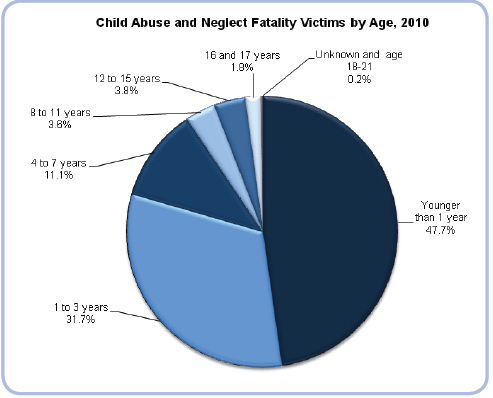
Read more at Age Groups Most Vulnerable
Causes of Child Abuse- How do these deaths occur?
Fatal child abuse may involve repeated abuse over a period of time (e.g., battered child syndrome), or it may involve a single, impulsive incident (e.g., drowning, suffocating, or shaking a baby). In cases of fatal neglect, the child's death results not from anything the caregiver does, but from a caregiver's failure to act. Read more at how do these deaths occur
Who are the perpetrators?
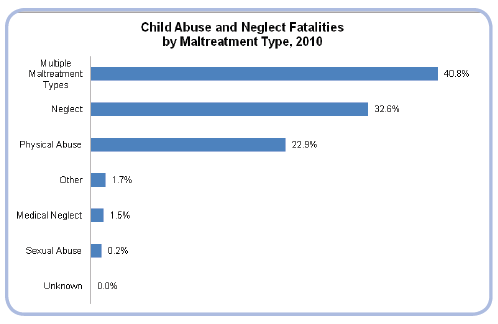
No matter how the fatal abuse occurs, one fact of great concern is that the perpetrators are, by definition, individuals responsible for the care and supervision of their victims. In 2010, parents, acting alone or with another person, were responsible for 79.2 percent of child abuse or neglect fatalities. Almost 30 percent (29.2 percent) were perpetrated by the mother acting alone.
Read more at who is responsible for the child's death
Watch here as Daleen Berry talks about Recognizing the Red Flags- Signs of child abuse, how to get help (video)
Characteristics of a Child Molester
Most people imagine a molester to be some ugly, unshaven, wearing a dark trench coat who coaxes small children with candy and a puppy dog. This picture is rare, what people don't realize is the molester may be known to them, think of Uncle Joe or Tom, Aunt Amy, perhaps the nice old neighbor guy who couldn't hurt a flea, a trusted co-worker that you would entrust your life to. How about mom or dad? These are the likely molesters in a child's life, not the Hollywood portrayal of a scruffy dirty old man.
What's important to realize is that child molesters come from all walks of life, any religion, employed or not, from any race- there is no predeliction. They are found at every socioeconomic level- from poorist to the richest of us. They can be male (more common), or female (less common), or even another child.
Adults who molest children can be divided into two groups. A small percentage may have a lifelong, exclusive attraction to children, with little or no emotional attachment to other similar aged adults. The second group of molesters, the majority of them are not lifelong exclusively attracted to children, they are able to manage adult relationships on some variable level, and have not molested multiple child-victims. Additionally, adults who molest children of same sex/gender are not necessarily homosexual; they may well be involved in a heterosexual adult relationship.
In a smaller proportion of child molestations, the child molester is NOT known by the child or his immediate adults. In this case, the molester gained access to the child through manipulating his/her's access to children, and is trolling for a child to whom they can attach themselves. Some of the methods by which this subset group gains access include force, fear, bribes (candy and puppy dogs), or trickery- he/she may lie to the child stating they are a trusted family member's friend there to assist them. What everr the means, the child molester's goal is to drop the child's mistrust of strangers, reducing the chance of exposure, alarm raised by the child.
These are but a few of the characteristics utilized by professional treatment providers, researchers, and Law Enforcement Agencies (LEA) to identify a potential child predator.
To read more about the Characteristics of Child Molesters read more>>
How many missing and exploited children are there in the United States?
Missing and exploited children statistics are available in the National Incidence Studies on Missing... Read More>> Missing and Exploited Children
What is the Department of Justice doing to help protect children from online predators?
In response to the threat of computer-facilitated sexual exploitation crimes committed against child... Read More>> Justice Department Takes Action Last Updated: October 4, 2010
Crimes Against Children Research Center
University of New Hampshire researches the victimization of children and adolescents both within and outside the family. The Center's research addresse criminal acts as defined by law, child abuse and neglect, child-to-child violence, and indirect victimization.
Sexting: A typology
Sexting has prompted considerable worry and controversy...Read More>> Dangers of Sexting
Poly-Victimization in a National Sample of Children and Youth
Documents children's lifetime exposure to multiple victimization types and examines the association between victimizations and the extent of trauma.
Child Victemization (PDF - 118 KB)
Turner, Finkelhor, & Ormrod American Journal of Preventive Medicine, 38(3), 2010
Long-Term Consequences of Child Abuse and Neglect
An estimated 905,000 children were victims of child abuse or neglect in 2006 (U.S. Department of Health and Human Services, 2008). While physical injuries may or may not be immediately visible, abuse and neglect can have consequences for children, families, and society that last lifetimes, if not generations.
The impact of child abuse and neglect is often discussed in terms of physical, psychological, behavioral, and societal consequences. In reality, however, it is impossible to separate them completely. Physical consequences, such as damage to a child's growing brain, can have psychological implications such as cognitive delays or emotional difficulties. Psychological problems often manifest as high-risk behaviors. Depression and anxiety, for example, may make a person more likely to smoke, abuse alcohol or illicit drugs, or overeat. High-risk behaviors, in turn, can lead to long-term physical health problems such as sexually transmitted diseases, cancer, and obesity. Long Term Consequences Child Abuse (PDF)
Longitudinal Studies of Child Abuse and Neglect
LONG SCAN is a consortium of longitudinal research studies on the causes and impact of child abuse and neglect, initiated in 1990 with grants from the National Center on Child Abuse and Neglect. The size and diversity of the sample (1,354 children from five distinct geographical areas) enables LONGSCAN to examine the relative impact of various forms of maltreatment, alone and in combination. LONGSCAN studies also evaluate the effectiveness of child protection and child welfare services. read more here>>
Factors Affecting the Consequences of Child Abuse and Neglect
Not all abused and neglected children will experience long-term consequences. Outcomes of individual cases vary widely and are affected by a combination of factors, including:
- The child's age and developmental status when the abuse or neglect occurred
- The type of abuse (physical abuse, neglect, sexual abuse, etc.)
- The frequency, duration, and severity of abuse
- The relationship between the victim and his or her abuser (English et al., 2005; Chalk, Gibbons, & Scarupa, 2002)
Researchers also have begun to explore why, given similar conditions, some children experience long-term consequences of abuse and neglect while others emerge relatively unscathed. The ability to cope, and even thrive, following a negative experience is sometimes referred to as "resilience." A number of protective and promotive factors may contribute to an abused or neglected child's resilience. These include individual characteristics, such as optimism, self-esteem, intelligence, creativity, humor, and independence, as well as the acceptance of peers and positive individual influences such as teachers, mentors, and role models. Other factors can include the child's social environment and the family's access to social supports. Community well-being, including neighborhood stability and access to safe schools and adequate health care, are other protective and promotive factors (Fraser & Terzian, 2005).
Physical Health Consequences
The immediate physical effects of abuse or neglect can be relatively minor (bruises or cuts) or severe (broken bones, hemorrhage, or even death). In some cases the physical effects are temporary; however, the pain and suffering they cause a child should not be discounted. Meanwhile, the long-term impact of child abuse and neglect on physical health is just beginning to be explored. According to the National Survey of Child and Adolescent Well-Being (NSCAW), more than one-quarter of children who had been in foster care for longer than 12 months had some lasting or recurring health problem (Administration for Children and Families, Office of Planning, Research, and Evaluation [ACF/OPRE], 2004a). Below are some outcomes researchers have identified:
- Impaired Brain Development.
- Shaken Baby Syndrome (see expanded discussion below)
- Poor Physical Health
Impaired Brain Development
Child abuse and neglect have been shown, in some cases, to cause important regions of the brain to fail to form or grow properly, resulting in impaired development (De Bellis & Thomas, 2003). These alterations in brain maturation have long-term consequences for cognitive, language, and academic abilities (Watts-English, Fortson, Gibler, Hooper, & De Bellis, 2006). NSCAW found more than three-quarters of foster children between 1 and 2 years of age to be at medium to high risk for problems with brain development, as opposed to less than half of children in a control sample (ACF/OPRE, 2004a).
Poor Physical Health
Several studies have shown a relationship between various forms of household dysfunction (including childhood abuse) and poor health (Flaherty et al., 2006; Felitti, 2002). Adults who experienced abuse or neglect during childhood are more likely to suffer from physical ailments such as allergies, arthritis, asthma, bronchitis, high blood pressure, and ulcers (Springer, Sheridan, Kuo, & Carnes, 2007).
Shaken Baby Syndrome
Shaken baby syndrome is a severe form of child abuse caused by violently shaking an infant or child.
Alternative Names
Shaken impact syndrome; Whiplash - shaken infant
Considerations
Shaken baby syndrome can occur from as little as 5 seconds of shaking.
Shaken baby injuries usually occur in children younger than 2 years old but may be seen in children up to the age of 5.
When an infant or toddler is shaken, the brain bounces back and forth against the skull. This can cause bruising of the brain (cerebral contusion), swelling, pressure, and bleeding in the brain. The large veins along the outside of the brain may tear, leading to further bleeding, swelling, and increased pressure. This can easily cause permanent brain damage or death.
Shaking an infant or small child may cause other injuries, such as damage to the neck, spine, and eyes.
Causes
In most cases, an angry parent or caregiver shakes the baby to punish or quiet the child. Such shaking usually takes place when the infant is crying inconsolably and the frustrated caregiver loses control. Many times the caregiver did not intend to harm the baby. Still, it is a form of child abuse.
Injuries are most likely to happen when the baby is shaken and then the baby's head hits something. Even hitting a soft object, such as a mattress or pillow, may be enough to injure newborns and small infants. Children's brains are softer, their neck muscles and ligaments are weak, and their heads are large and heavy in proportion to their bodies. The result is a type of whiplash, similar to what occurs in some auto accidents.
Shaken baby syndrome does not result from gentle bouncing, playful swinging or tossing the child in the air, or jogging with the child. It also is very unlikely to occur from accidents such as falling off chairs or down stairs, or accidentally being dropped from a caregiver's arms. Short falls may cause other types of head injuries, although these are often minor.
Symptoms
The symptoms can vary from mild to severe. They may include:
- Convulsions (seizures)
- Decreased alertness
- Extreme irritability or other changes in behavior
- Lethargy, sleepiness, not smiling
- Loss of consciousness
- Loss of vision
- No breathing
- Pale or bluish skin
- Poor feeding, lack of appetite
- Vomiting
There may not be any physical signs of injury, such as bruising, bleeding, or swelling. In some cases, the condition can be difficult to diagnose and may not be identified during an office visit. However, rib fractures are common and can be seen on x-ray.
An eye doctor may find bleeding behind the baby's eye or retinal detachment. There are, however, other causes of bleeding behind the eye and they should be ruled out before diagnosing shaken baby syndrome. Other factors must be considered.
First Aid
Call 9-1-1 or your local emergency number. Immediate emergency treatment is necessary.
If the child stops breathing before emergency help arrives, CALL 9-1-1 then begin CPR.
See: CPR in an infant under 1 year old
Steps to take if the child is vomiting:
- A spinal injury may exist, DO NOT TURN THE CHILD'S HEAD. CAREFULLY roll the child's whole body to one side at the same time (as if rolling a log) while protecting the neck to prevent choking and aspiration.
Do Not
- DO NOT pick up or shake the child to wake him or her up.
- DO NOT attempt to give the child anything by mouth.
Call immediately for emergency medical assistance if
Call your health care provider if a child has any of the above signs or symptoms, regardless of how severe they are. Also call if you think a child has shaken baby syndrome.
Prevention
- NEVER shake a baby or child in play or in anger. Even gentle shaking can become violent shaking when you are angry.
- Do not hold your baby during an argument.
- If you find yourself becoming annoyed or angry with your baby, put him in the crib and leave the room. Try to calm down. Call someone for support.
- Call a friend or relative to come and stay with the child if you feel out of control.
- Contact a local crisis hotline or child abuse hotline for help and guidance.
- Seek the help of a counselor and attend parenting classes.
- Do not ignore the signs if you suspect child abuse in your home or in the home of someone you know.
Psychological Consequences
Difficulties during infancy.
Difficulties during infancy.
Depression and withdrawal symptoms were common among children as young as 3 who experienced emotional, physical, or environmental neglect. (Dubowitz, Papas, Black, & Starr, 2002).
Poor mental and emotional health.
Family Violence outcomes
In one long-term study, as many as 80 percent of young adults who had been abused met the diagnostic criteria for at least one psychiatric disorder at age 21. These young adults exhibited many problems, including depression, anxiety, eating disorders, and suicide attempts (Silverman, Reinherz, & Giaconia, 1996). Other psychological and emotional conditions associated with abuse and neglect include panic disorder, dissociative disorders, attention-deficit/hyperactivity disorder, depression, anger, posttraumatic stress disorder, and reactive attachment disorder (Teicher, 2000; De Bellis & Thomas, 2003; Springer, Sheridan, Kuo, & Carnes, 2007).
Cognitive difficulties.
NSCAW found that children placed in out-of-home care due to abuse or neglect tended to score lower than the general population on measures of cognitive capacity, language development, and academic achievement (U.S. Department of Health and Human Services, 2003). A 1999 LONGSCAN study also found a relationship between substantiated child maltreatment and poor academic performance and classroom functioning for school-age children (Zolotor, Kotch, Dufort, Winsor, & Catellier, 1999).
Social difficulties
Children who experience rejection or neglect are more likely to develop antisocial traits as they grow up. Parental neglect is also associated with borderline personality disorders and violent behavior (Schore, 2003).
Behavioral Consequences
Not all victims of child abuse and neglect will experience behavioral consequences. However, behavioral problems appear to be more likely among this group, even at a young age. An NSCAW survey of children ages 3 to 5 in foster care found these children displayed clinical or borderline levels of behavioral problems at a rate of more than twice that of the general population (ACF, 2004b). Later in life, child abuse and neglect appear to make the following more likely:
Difficulties during adolescence.
Studies have found abused and neglected children to be at least 25 percent more likely to experience problems such as delinquency, teen pregnancy, low academic achievement, drug use, and mental health problems (Kelley, Thornberry, & Smith, 1997). Other studies suggest that abused or neglected children are more likely to engage in sexual risk-taking as they reach adolescence, thereby increasing their chances of contracting a sexually transmitted disease (Johnson, Rew, & Sternglanz, 2006).
Juvenile delinquency and adult criminality.
According to a National Institute of Justice study, abused and neglected children were 11 times more likely to be arrested for criminal behavior as a juvenile, 2.7 times more likely to be arrested for violent and criminal behavior as an adult, and 3.1 times more likely to be arrested for one of many forms of violent crime (juvenile or adult) (English, Widom, & Brandford, 2004).
Alcohol and other drug abuse
Research consistently reflects an increased likelihood that abused and neglected children will smoke cigarettes, abuse alcohol, or take illicit drugs during their lifetime (Dube et al., 2001). According to a report from the National Institute on Drug Abuse, as many as two-thirds of people in drug treatment programs reported being abused as children (Swan, 1998).
Abusive behavior
Abusive parents often have experienced abuse during their own childhoods. It is estimated approximately one-third of abused and neglected children will eventually victimize their own children (Prevent Child Abuse New York, 2003).
Societal Consequences
While child abuse and neglect almost always occur within the family, the impact does not end there. Society as a whole pays a price for child abuse and neglect, in terms of both direct and indirect costs.
Direct costs.
Direct costs include those associated with maintaining a child welfare system to investigate and respond to allegations of child abuse and neglect, as well as expenditures by the judicial, law enforcement, health, and mental health systems. A 2001 report by Prevent Child Abuse America estimates these costs at $24 billion per year.
Indirect Costs
Indirect costs represent the long-term economic consequences of child abuse and neglect. These include costs associated with juvenile and adult criminal activity, mental illness, substance abuse, and domestic violence. They can also include loss of productivity due to unemployment and underemployment, the cost of special education services, and increased use of the health care system. Prevent Child Abuse America estimated these costs at more than $69 billion per year (2001).
Summary
Much research has been done about the possible consequences of child abuse and neglect. The effects vary depending on the circumstances of the abuse or neglect, personal characteristics of the child, and the child's environment. Consequences may be mild or severe; disappear after a short period or last a lifetime; and affect the child physically, psychologically, behaviorally, or in some combination of all three ways. Ultimately, due to related costs to public entities such as the health care, human services, and educational systems, abuse and neglect impact not just the child and family, but society as a whole.
Resources
Child Abuse and Neglect
https://www.childwelfare.gov/can/
Defining Child Abuse and Neglect
https://www.childwelfare.gov/can/defining/
Preventing Child Abuse and Neglect
https://www.childwelfare.gov/preventing/
Reporting Child Abuse and Neglect
https://www.childwelfare.gov/responding/reporting.cfm
References
Administration for Children and Families, Office of Planning, Research and Evaluation. (2004a). Who are the children in foster care? NSCAW Research Brief No. 1. Retrieved August 9, 2007, from the National Data Archive on Child Abuse and Neglect website:
https://www.childwelfare.gov/survey/disclaimerAskme.cfm?target=http%3A%2F%2Fwww.ndacan.cornell.edu%2FNDACAN%2FDatasets%2FRelated_Docs%2FNSCAW_Research_Brief_1.pdf&referrer='https://www.childwelfare.gov/pubs/factsheets/long_term_consequences.cfm'
Chalk, R., Gibbons, A., & Scarupa, H. J. (2002). The multiple dimensions of child abuse and neglect: New insights into an old problem. Washington, DC: Child Trends. Retrieved April 27, 2006, from:
https://www.childwelfare.gov/survey/disclaimerAskme.cfm?target=http%3A%2F%2Fwww.childtrends.org%2FFiles%2FChildAbuseRB.pdf&referrer='https://www.childwelfare.gov/pubs/factsheets/long_term_consequences.cfm'
Administration for Children and Families, Office of Planning, Research and Evaluation. (2004b). Children ages 3 to 5 in the child welfare system. NSCAW Research Brief No. 5. Washington, DC: Author.
De Bellis, M., & Thomas, L. (2003). Biologic findings of post-traumatic stress disorder and child maltreatment. Current Psychiatry Repots, 5, 108-117.
Dube, S. R., Anda, R. F., Felitti, V. J., Chapman, D., Williamson, D. F., & Giles, W. H. (2001). Childhood abuse, household dysfunction and the risk of attempted suicide throughout the life span: Findings from the Adverse Childhood Experiences Study. Journal of the American Medical Association, 286, 3089-3096
Dubowitz, H., Papas, M. A., Black, M. M., & Starr, R. H., Jr. (2002). Child neglect: Outcomes in high-risk urban preschoolers. Pediatrics, 109, 1100-1107
English, D. J., Upadhyaya, M. P., Litrownik, A. J., Marshall, J. M., Runyan, D. K., Graham, J. C., & Dubowitz, H. (2005). Maltreatment's wake: The relationship of maltreatment dimensions to child outcomes. Child Abuse and Neglect, 29, 597-619.
See full citations, credits at: Long Term Consequences Child Abuse
Child Welfare Information Gateway. (2012). Child abuse and neglect fatalities 2010: Statistics and interventions. Washington, DC: U.S. Department of Health and Human Services, Children's Bureau. Child Welfare Information Gateway
Child fatalities by types of abuse
U.S. Department of Health and Human Services
Child Abuse Maltreatment (PDF - 3.97 MB) Year Published: 2010 - 227 pages
CITATION
Wang, C.T. and Daro, D. (1998). Current Trends in Child Abuse Reporting and Fatalities: The Results of the 1997 Annual Fifty State Survey. Chicago, IL: Prevent Child Abuse America.
SOURCES
American Association for Protecting Children (AAPC). (1988) Highlights of Official Child Neglect and Abuse Reporting, 1986. Denver, CO.: American Humane Association.
Finkelhor, D. and Williams, L. (1988) Nursery Crimes: Sexual Abuse in Day Care. California: Sage Publications.
Sedlak, A. (1996). Early Findings from the Third National Incidence Study of Child Abuse and Neglect: 1988. Rockville, MD: Westat, Inc. (301) 251-4211.
Related articles
- Indications of Child Abuse & Maltreatment
- Long-Term Consequences of Child Abuse and Neglect
- What Is Child Abuse and Neglect?
- Child Abuse Neglect & Statistics (PDF - 1.2MB)
New Day, New Hope
Do you have a story to share New Day New Hope is the place to share your stories of hope, and love.
Child Slavery &
Sex Trafficking
Child Sex Slavery- sexual exploitation of children in violation of Human Rights Vienna Declaration
Parenting & Self-help
Take Charge of Self esteem, Anxiety, Parenting Toddlers through the Terrible Two's Help for Troubled Teens for 
Child Abuse Resources
What's abuse, who to trust with your child, shaken baby, bullying, teen suicide, help for kids & parents.
April- Child Abuse Prevention Month
Child abuse prevention is a 365 day, 24/7 Work of Love! Celebrate the efforts behind saving our children here.
Child Help National Hotline
Call 1-800-4-A-CHILD. Hotline Staffed 24/7 by Certified Degreed Counselors. Get Help Today!
 Find us on Facebook